The moving visitor
A comet is less like a star and more like weather with an orbit.
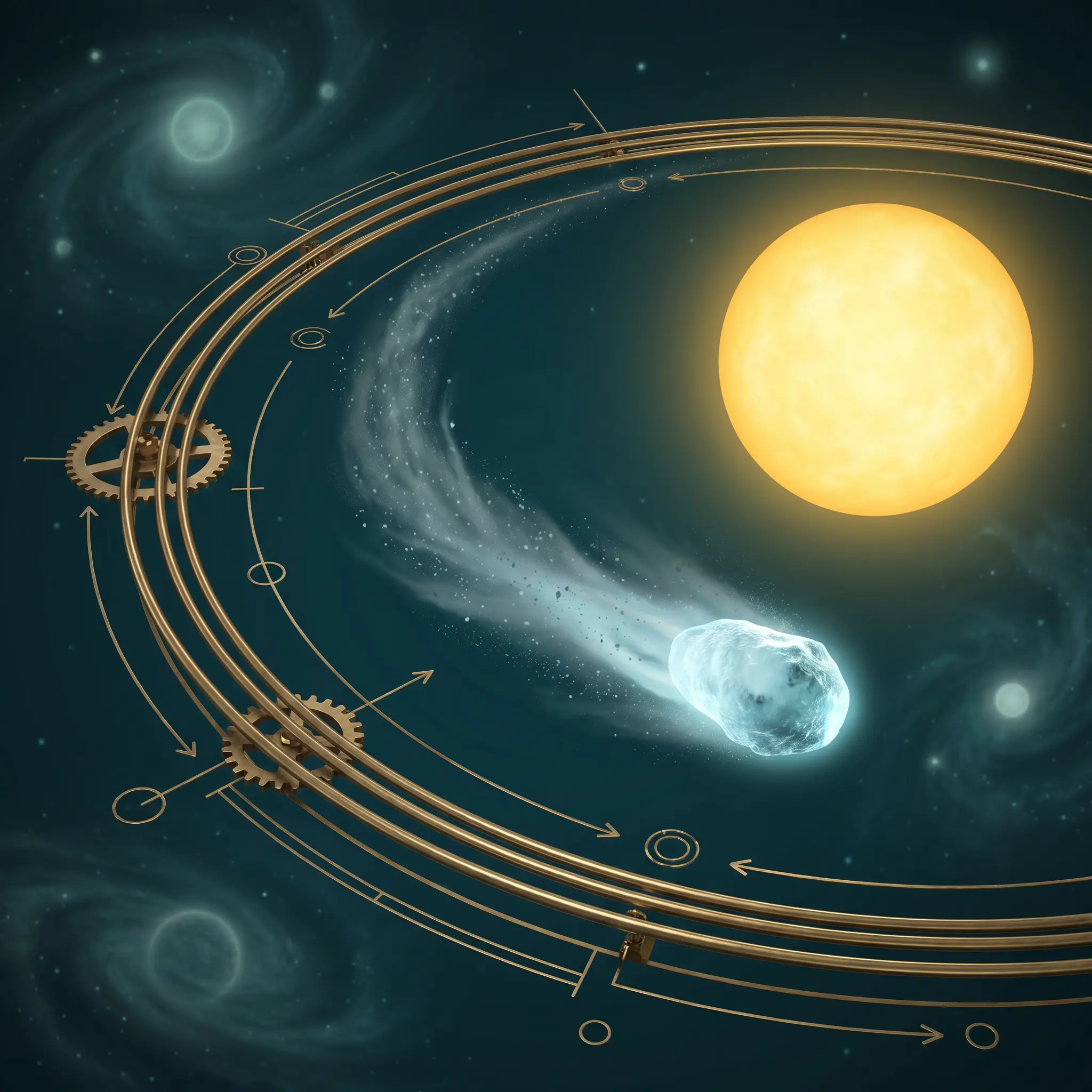
A comet's nucleus is small, dark, and usually invisible from a backyard. What observers see is the coma, a temporary atmosphere of gas and dust released as sunlight warms the nucleus. The tail does not trail behind the comet like smoke behind a train; dust and ion tails respond to sunlight and the solar wind, so their direction can surprise new observers.
Brightness estimates are also tricky. Magnitude compresses a comet's total light into one number, but that light may be spread across a wide fuzzy patch. A compact eighth-magnitude comet can be easier than a broad sixth-magnitude one. Geometry matters too: the comet's distance from Earth, distance from the sun, phase angle, altitude, and background sky all change how it appears night by night.
Comet Casa uses these basics to keep expectations honest. A disappointing sighting can still be a good observation if the log records why: low altitude, bright moon, poor transparency, weak condensation, or a tail too broad for the instrument. Understanding the object makes the faint view feel connected to a larger path through the solar system.